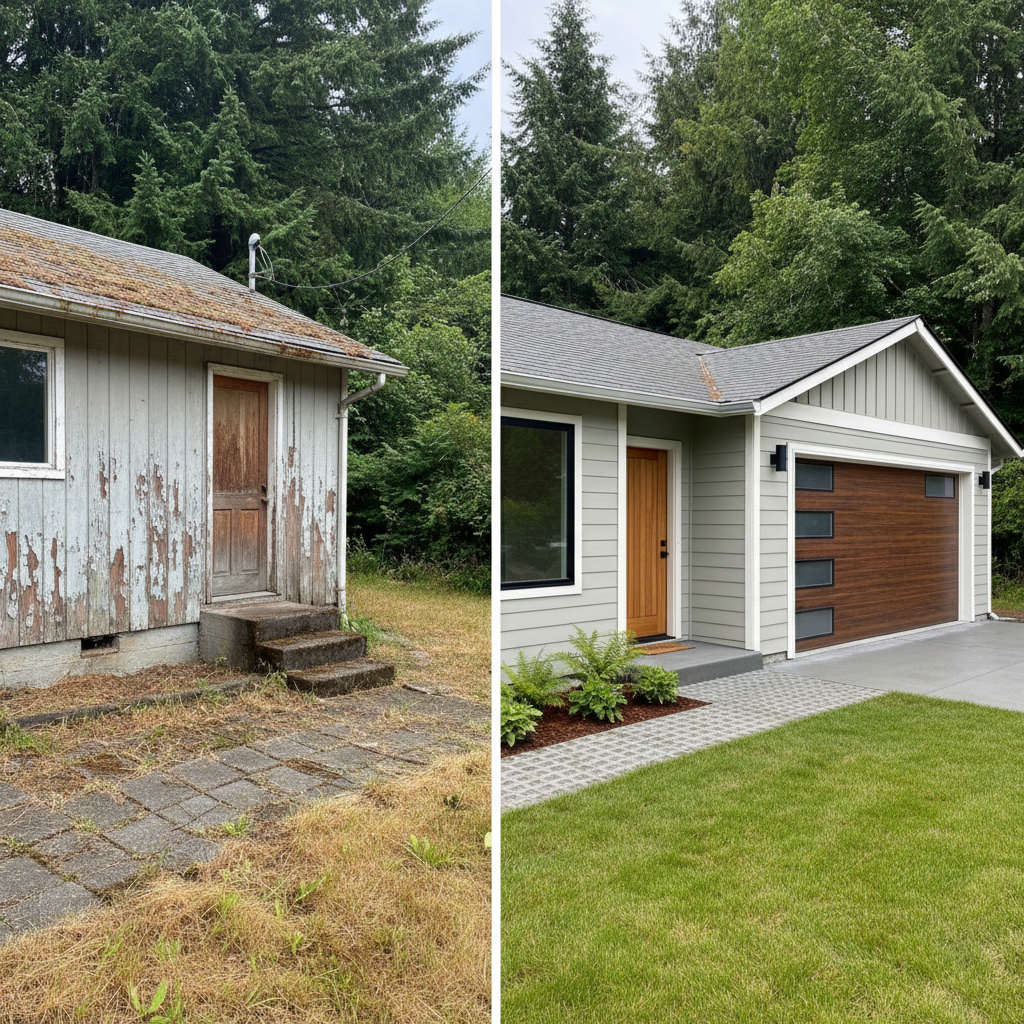
So, you're looking at that unused garage space and thinking, "Hey, that could be an office, a guest suite, or even an ADU." Smart move. Converting a garage is one of the most cost-effective ways to add living space to your home without building new from the ground up. But before you get too far into picking paint colors, we need to talk about the foundation – specifically, the floor.
Most garages around Beaverton, especially those built in the 70s or 80s in neighborhoods like Sexton Mountain, have a concrete slab floor. It's tough, it's durable, and it's what your car sits on. When you convert that space, you've got two main options for the floor: keep the slab and build on it, or build a new raised floor over the existing slab. Each has its pros and cons, and what's right for one homeowner might not be for another.
Option 1: Building on the Existing Concrete Slab
This is often the first thing people consider because, well, the slab is already there. It seems like the easiest path, right? Sometimes it is, but there are definitely things to watch out for.
Cost & Time
Initially, this can look like the cheaper option. You're not pouring a new foundation or building a whole new subfloor system. You'll still need to prep the slab, which usually involves cleaning, repairing any cracks, and then adding a vapor barrier. After that, you'll install rigid insulation directly on the slab, then plywood subflooring, and finally your finished floor. It can be quicker because you're not waiting for new concrete to cure or for extensive framing.
Durability & Maintenance
A good concrete slab is incredibly durable. It's not going anywhere. The main concern here in our damp Oregon climate is moisture. Concrete is porous, and even with a vapor barrier, moisture can wick up from the ground. If that barrier isn't perfect or if you have drainage issues around your garage, you could be looking at mold or mildew problems down the line. You'll want to make sure your contractor is meticulous about that vapor barrier and proper slab prep. Any future plumbing lines for a bathroom or kitchen will need to be trenched into the slab, which is a messy, dusty job and can add significant cost and time.
Appearance & Comfort
When done right, the finished floor looks just like any other floor. The biggest difference is often in comfort. A slab floor, even with insulation, can feel colder underfoot than a raised floor, especially in winter. It also doesn't have the same