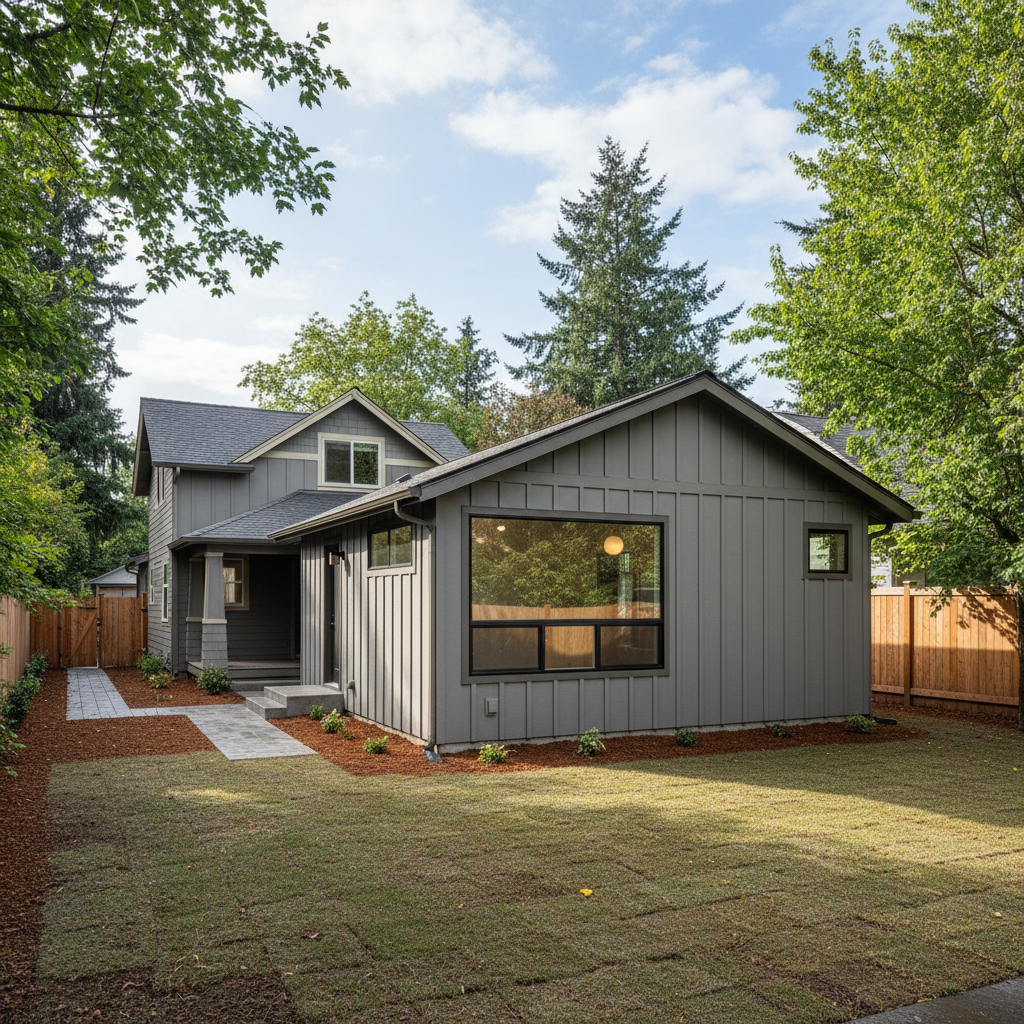
Let's talk about what ADU engineering costs in Beaverton. It's not the flashiest part of building an accessory dwelling unit, no, but it's absolutely critical. You simply can't get a permit without it, and trying to cut corners here will definitely cost you way more in the long run. So, what exactly are we looking at?
What Even Is ADU Engineering?
When I mention ADU engineering, I'm mostly talking about structural engineering, and sometimes civil engineering too. Structural engineering makes sure your ADU stands up, literally. It covers things like the foundation, the framing, the roof structure, and how it all handles seismic activity – which, yeah, is a real concern here in the Pacific Northwest. Civil engineering, on the other hand, deals with site-specific stuff. Think grading, drainage, and utility connections, especially if your lot has slopes or tricky water runoff.
You'll need an engineer to review your architectural plans. They'll make sure everything meets Oregon's building codes and all the local Beaverton requirements. They'll run calculations, specify materials, and often provide drawings that get stamped for permitting.
What Drives the Cost Up (or Down)?
A few big things really affect what you'll pay for engineering. It's definitely not a one-size-fits-all number.
Size and Complexity: A small, simple detached ADU on a flat lot will be cheaper to engineer than, say, a two-story unit with a complex roofline built right into a hillside. More square footage and more intricate designs mean more calculations and drawings for the engineer, plain and simple.
Foundation Type: Are we doing a standard slab-on-grade? Or do we need a crawl space, or even a full basement? Basements, especially, add a lot of structural complexity and cost. If your lot has poor soil conditions – like some of the clay-heavy soils we see around the Cooper Mountain area – you might need a more substantial (and expensive) foundation design, which requires more engineering.
Site Conditions: Is your lot flat as a pancake, or does it have a significant slope? Sloped lots often need retaining walls, special drainage solutions, and more complex civil engineering. Existing utility lines or easements can also complicate things quite a bit.
Attached vs. Detached: An attached ADU often means dealing with existing house structures. This can sometimes add complexity if the engineer needs to figure out how to integrate new loads with old ones. Detached units are usually a bit more straightforward from a structural standpoint.
Engineer's Experience & Reputation: Like any professional, some engineers charge more based on their experience and how in-demand they are. You're paying for their expertise, so don't just go for the cheapest option here. A good engineer can save you headaches and money down the line, believe me.
Typical Cost Ranges in Beaverton
Alright, let's get down to some actual numbers. Remember, these are ranges, and your specific project will dictate where you fall.
Basic Structural Engineering (for a simple, detached ADU, 400-800 sq ft): You're generally looking at $3,000 to $6,000. This covers the foundation, framing, and roof structure for a straightforward build.
More Complex Structural Engineering (larger ADU, two stories, or more intricate design): This can jump to $6,000 to $10,000+. Think about a 1000 sq ft unit with a second story or a tricky roof.
Civil Engineering (for grading, drainage, utility connections, especially on sloped lots): This is usually an additional cost, ranging from $2,500 to $7,000+. If you have a super flat, easy lot, you might be on the lower end or even avoid extensive civil engineering if your architect handles basic site plans. But if you're dealing with significant slopes or stormwater management issues, it'll be higher.
Geotechnical Report (Soil Test): Sometimes, the city or your engineer will require a soil test. This happens especially on sloped sites or if there's any concern about soil stability. It's typically an additional $2,000 to $4,000. You don't always need it, but it's smart to budget for it just in case.
So, for most Beaverton ADU projects, you're probably going to spend anywhere from $5,500 to $15,000+ on engineering services. This is a significant chunk of change, but it's non-negotiable for a safe, legal, and durable ADU.
What's Included in a Quote?
When you get a quote from an engineer, make sure it's super clear what you're actually getting. A good quote should specify:
Scope of Work: Exactly what they're engineering (foundation, framing, roof, retaining walls, etc.).
Deliverables: Stamped engineering drawings, calculations, and any reports (like a structural observation report if required during construction).
Number of Revisions: How many rounds of changes are included? You really don't want to pay extra for every minor tweak.
Site Visits: Will they visit the site during design or construction? Sometimes the city requires a structural observation during the foundation pour or framing.
Permit Support: Will they answer questions from the city's plan reviewers if issues come up? That's a big one.
How to Avoid Overpaying
You want quality engineering, but you certainly don't want to get ripped off. Here's how to be smart about it:
Have Clear Architectural Plans: The more complete and detailed your architectural drawings are *before* you hand them to an engineer, the better. If an engineer has to guess or fill in blanks, it takes more time, and that costs you more.
Get Multiple Bids: Always get quotes from at least three different licensed structural engineers. Compare not just the price, but also the scope of work they're offering.
Ask for Referrals: Your architect or contractor (like us at Coastal ADU) can often recommend engineers they've worked with successfully. We know who does good work and who understands Beaverton's specific requirements.
Don't Over-Engineer: Sometimes an engineer might propose solutions that are overkill for your project. Ask questions! Is that *really* necessary? Is there a simpler, equally safe alternative? A good engineer will explain their reasoning clearly.
Understand Your Site: Knowing if you have a steep slope, a high water table, or poor soil conditions upfront can help you get more accurate bids and avoid surprises.
Engineering is an investment, not an expense you should skimp on. It ensures your ADU is safe, compliant, and built to last. Do your homework, ask the right questions, and you'll get solid engineering without breaking the bank.